DeepSeek’s Model Switch Shows Why a Familiar Name Is Not a Stability Guarantee
The V4 Pro routing change turns a model launch into a maintenance decision for developers. Compatibility at the connection is only the first test.
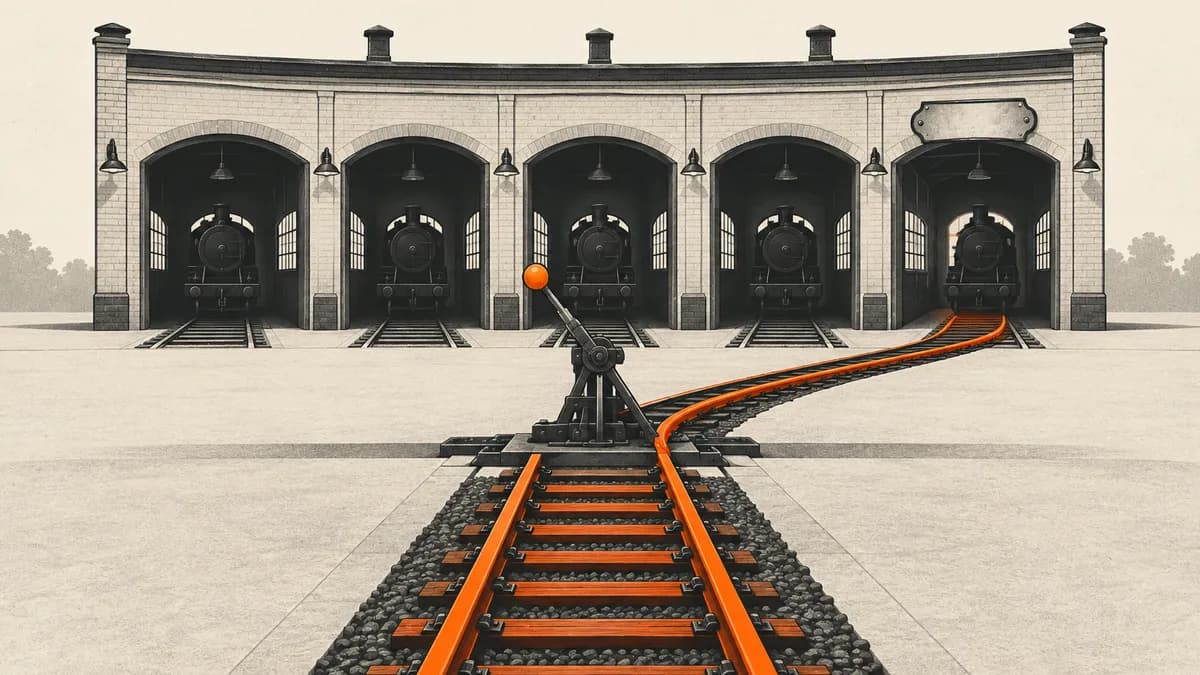
DeepSeek scheduled a change for 04:00 UTC on September 14: requests naming deepseek-v4-pro would be handled by DeepSeek-V4.1-Flash and charged at Flash rates until V4.1-Pro launches. The published deadline has arrived. Agentive has inspected the notice, not tested the live routing.
The distinction is easy to miss because the application may continue making requests successfully. A broken connection announces itself. A changed system behind a working connection can be less obvious. For a developer, that makes the transition a maintenance event even if no line of integration code needs changing. The part worth protecting is the behavior the application relies on, not the spelling of the request.
For a developer, the important detail is that the request can keep the same model name while the system doing the work changes. The announcement on September 10 introduced V4.1-Flash as a new architecture family with native image understanding, and recommends deepseek-flash as the name to call.
Two meanings of compatibility
An interface can remain compatible while its answers change. It may accept the same fields and return the same structure, allowing the surrounding program to keep running. But the model inside that structure may interpret an instruction differently or make a different mistake. These are possibilities to test during a transition, not failures demonstrated here. They explain why connection-level compatibility is an incomplete assurance.
DeepSeek also says the older deepseek-v4-flash and deepseek-v4-flash-vision-exp names temporarily route to V4.1-Flash after their original models were retired. Keeping those names working reduces immediate integration breakage. It does not preserve the old model’s behavior.
Keeping old names available has a practical upside. A forced error could interrupt every application that had not yet migrated. A temporary route to a newer model can prevent that immediate outage. The tradeoff is that continuity of service can obscure a change in the service itself. The helpful version of that arrangement gives developers enough notice and clarity to assess the new behavior deliberately.
Requesty, a company that routes requests among model providers, highlighted this operational distinction in its launch analysis. Its commercial interest is relevant: routing changes are a problem its product helps manage. The underlying migration dates here come from DeepSeek’s own notice.
The model is part of the application
A useful way to approach this is to treat a model choice like any other dependency that affects the result. The fact that it is reached remotely does not make its behavior external to the application’s quality. If a user receives the wrong extracted field, the application has failed that user regardless of whether the mistake originated in local code or in a provider’s response.
Imagine a team has checked that an AI extracts the right fields from a particular invoice format. That is a hypothetical example, not an Agentive test. If the service swaps the model behind the saved identifier, a successful connection alone says nothing about whether those extraction checks still pass.
In the invoice example, a meaningful check would use representative documents and inspect the extracted fields, including awkward layouts and missing information. The test should establish whether the new service meets the application’s requirements, rather than whether it reproduces every sentence the old model would have written. Exact imitation may be unnecessary; preservation of the useful behavior is the relevant goal.
There is also an opportunity to improve the application’s design. If a minor model change causes an unacceptable downstream result, the surrounding system may have been relying on an assumption it never made explicit. A migration can expose that assumption. For example, a workflow might need to reject an uncertain extraction instead of passing it onward. That is a hypothetical design lesson, not a claim about the quality of either DeepSeek model.
The new model may prove useful. DeepSeek says it offers better efficiency and retains off-peak prices at half the peak level. But lower processing prices and improved benchmark results would not remove the need to check a team’s actual tasks after a model transition.
Lower cost can fund better checking
A cheaper service can be a real gain if it performs the task adequately. It might make a previously uneconomic workflow practical or leave room for additional verification. The mistake would be to bank the saving before accounting for the transition and the work required to assess the output. Processing cost is one component of operating the application, even when it is the easiest one to compare.
Nor should caution become a demand that providers never change anything. Newer systems can be more capable, efficient or easier to use. Freezing every dependency would have costs of its own. The useful discipline is to distinguish a deliberate adoption of those improvements from an unnoticed substitution. A team should be able to explain why the model now serving its users is suitable for their task.
DeepSeek’s notice makes the change visible, which gives developers a specific event to act on. The broader lesson is that a model identifier is a service promise whose meaning must be understood. It may identify a particular system, a moving family or a temporary route. A dependable application cannot leave that distinction implicit. The endpoint answering successfully is good news; the job still needs to finish correctly.